

critical thinking skills with information, misinformation, and rapid technological change, the ability to think clearly has never been more valuable. Developing strong critical thinking skills is no longer just an academic requirement — it is a life skill that shapes how we make decisions, solve problems, and interact with the world around us.
Whether you are a student, a professional, or someone simply trying to navigate everyday life more effectively, mastering this ability can transform the way you process information, evaluate evidence, and respond to challenges. This article explores ten essential mental abilities that will help you sharpen your mind, improve your decision-making, and stay ahead in an increasingly complex world. We will also look at key points, advantages, real-life examples, common myths, and the long-term scaling value of building these habits of the mind — habits that pay off in careers, relationships, finances, and everyday problem-solving alike.
What This Skill Set Really Means
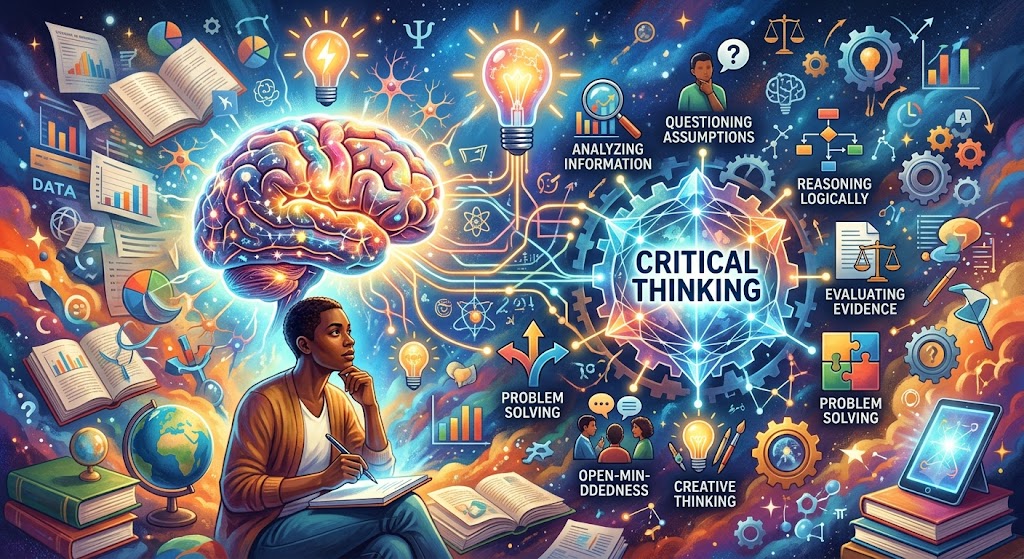
Before diving into the list, it’s important to understand what we mean by this term. At its core, the ability to analyze facts, evaluate evidence, and form a reasoned judgment is what defines this ability at its best. Rather than accepting information at face value, a person with well-developed reasoning habits questions assumptions, looks for patterns, and considers multiple perspectives before concluding.
These abilities are closely tied to analytical thinking, logical reasoning, and problem-solving, all of which work together to help individuals make sense of complex situations. Employers, educators, and psychologists alike agree that people who consistently apply strong reasoning habits tend to perform better in careers, relationships, and personal growth.
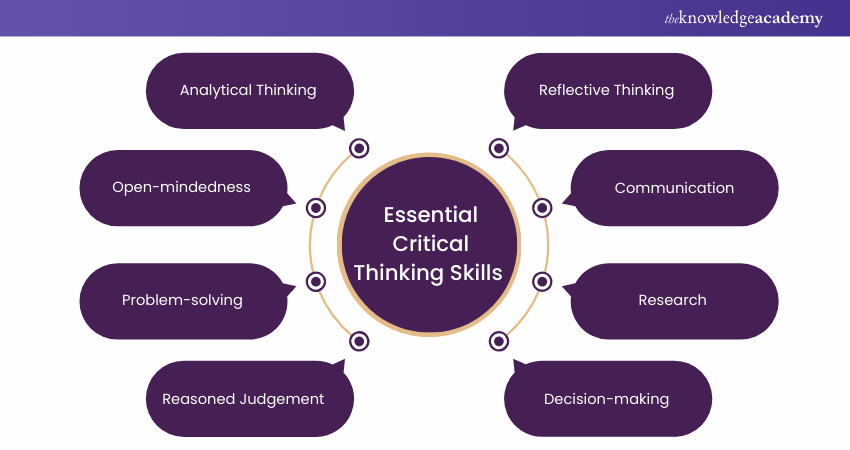
It’s also worth noting that this ability is not a single trait but a bundle of interconnected mental habits. Someone might be excellent at spotting logical fallacies but weak at staying open-minded, or highly analytical but poor at communicating conclusions. True mastery of this skill set comes from balancing all of these components together, rather than excelling in just one area.
Why This Ability Matters in 2026
The pace of technological change, the rise of artificial intelligence, and the sheer volume of daily information make it essential to develop critical thinking skills now more than ever. Automation is replacing repetitive tasks, but the human capacity for judgment, creativity, and problem-solving remains irreplaceable.
Companies are actively searching for employees who demonstrate strong reasoning and evaluation abilities, because these individuals adapt faster, make fewer errors, and contribute more meaningfully to team success. Reports from major hiring platforms consistently place independent judgment and analysis near the top of desired workplace competencies, often above narrow technical skills.
Key Points on Why This Matters
- The digital age demands the ability to separate fact from fiction using strong reasoning abilities.
- Employers rank reasoning and evaluation abilities among the top competencies for future job readiness.
- Strong critical thinking skills reduce impulsive, emotion-driven decisions.
- They support better decision-making in both personal and professional contexts.
- They help individuals adapt more smoothly to automation, AI tools, and shifting job markets.
1. Analytical Thinking
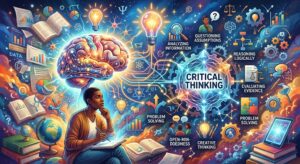
Analytical thinking is the foundation of strong critical thinking skills. It involves breaking down complex information into smaller, manageable parts to understand how each piece connects to the whole. People who practice analytical thinking are able to identify patterns, spot inconsistencies, and draw logical conclusions from data rather than relying on gut feeling alone.
This ability becomes especially valuable when dealing with large data sets, financial reports, or research findings, where surface-level reading can easily lead to incorrect conclusions. Analytical thinkers slow down, ask clarifying questions, and separate correlation from causation before forming an opinion.
Example: A financial analyst reviewing a company’s quarterly report doesn’t just look at the final profit number — they examine revenue streams, expenses, and market trends to understand the bigger picture.
Advantage: This skill helps professionals make informed choices backed by evidence rather than assumptions, reducing costly mistakes in business and daily life.
2. Logical Reasoning
Logical reasoning allows individuals to draw valid conclusions from available information. This is one of the most measurable components of strong reasoning, often tested in academic and professional assessments. It requires identifying cause-and-effect relationships and avoiding fallacies that can lead to poor conclusions.
Strengthening logical reasoning also means recognizing common traps, such as circular arguments, false equivalence, or hasty generalizations, all of which can distort otherwise sound judgment. People who train this skill regularly become far less susceptible to manipulative arguments or misleading statistics.
Example: A software engineer debugging code uses logical reasoning to trace an error back to its root cause instead of randomly changing lines of code.
Key Point: Strengthening this skill reduces errors in judgment and improves the accuracy of everyday decisions, from small purchases to major life choices.
3. Open-Mindedness
Being open-minded means willingly considering perspectives that differ from your own. This trait is essential to developing balanced reasoning, as it prevents bias from clouding judgment. Open-minded individuals are more likely to update their beliefs when presented with new evidence, rather than clinging to outdated opinions out of pride or comfort.
Cultivating genuine open-mindedness requires humility — the willingness to admit you might be wrong. This is often the hardest part of building strong critical thinking skills, since it directly challenges the ego and requires emotional maturity alongside intellectual honesty.
Example: A manager who listens to feedback from junior employees, even when it challenges their own assumptions, demonstrates true open-mindedness in action.
Advantage: This quality fosters innovation, collaboration, and healthier workplace relationships built on mutual respect.
4. Problem-Solving Ability
Problem-solving is a practical application of reasoning skills, focused on identifying solutions to challenges efficiently. It requires creativity, patience, and the willingness to test multiple approaches before settling on the best one. Strong critical thinking skills enable a person to break down a problem, evaluate possible solutions, and select the most effective one under real constraints.

Good problem solvers also learn to anticipate obstacles before they arise, building contingency plans rather than reacting only after something goes wrong. This proactive mindset separates average performers from truly exceptional ones in nearly every field.
Example: An entrepreneur facing a supply chain disruption might brainstorm alternative suppliers, evaluate costs, and choose the most sustainable option under pressure.
Key Point: Effective problem solvers save time, resources, and reduce stress in high-pressure situations, both at work and at home.
5. Reflective Thinking
Reflective thinking involves stepping back to evaluate your own thought processes, decisions, and actions. This self-awareness is central to building lasting critical thinking skills, because it helps individuals learn from mistakes rather than repeating them indefinitely.
Regular reflection also helps identify recurring patterns in poor decisions, allowing a person to correct course before small errors turn into larger, more expensive problems. Many top performers keep journals specifically to track and review their own reasoning over time.
Example: After a failed product launch, a marketing team reviews what went wrong, identifying gaps in research and communication for future campaigns.
Advantage: Reflection promotes continuous improvement and long-term personal growth that compounds year after year.
6. Effective Communication
Clear communication is often overlooked when discussing thinking abilities, but it plays a crucial role in expressing reasoned arguments. Without strong communication skills, even the sharpest reasoning may fail to influence others or drive meaningful change within a team or organization.
Being able to translate complex analysis into simple, digestible language is itself a demonstration of deep understanding. If someone cannot explain their reasoning clearly, it often signals gaps in their own comprehension of the subject.
Example: A scientist presenting complex research to a non-expert audience must simplify data without losing accuracy or nuance.
Key Point: The ability to articulate thoughts clearly increases persuasive power and reduces misunderstandings in both personal and professional settings.
7. Skepticism and Evidence Evaluation
Healthy skepticism means questioning claims and demanding evidence before accepting them as true. This is particularly important in an era of misinformation, where sharpened reasoning abilities help individuals distinguish credible sources from unreliable ones spreading online.
This does not mean becoming cynical or distrustful of everything; rather, it means calibrating trust based on evidence, track record, and transparency. Evaluating sources, checking dates, and cross-referencing claims are all practical habits that support this skill.

Example: Before sharing a news article on social media, a discerning reader checks the source, publication date, and author credibility.
Advantage: This habit protects against the spread of false information and builds a more informed, resilient society overall.
8. Decision-Making Under Uncertainty
Life rarely offers complete information before a decision must be made. The ability to weigh probabilities, risks, and potential outcomes reflects mature decision-making, a skill closely tied to overall reasoning ability. This involves accepting uncertainty while still moving forward confidently rather than freezing indefinitely.
Strong decision-makers also learn to separate the quality of a decision from the quality of its outcome — a well-reasoned choice can still lead to a bad result due to factors outside anyone’s control, and recognizing this distinction prevents unnecessary self-blame.
Example: A doctor diagnosing a patient with ambiguous symptoms must rely on experience, available data, and probability to recommend the safest treatment path.
Key Point: Strong decision-makers remain calm and structured even when faced with incomplete data or tight deadlines.
9. Creative Thinking
Creativity and logic may seem like opposites, but they work together within strong reasoning frameworks. Creative thinking allows individuals to generate original solutions rather than relying solely on conventional methods that may no longer apply to new situations.
The strongest critical thinking skills often emerge when analysis and imagination meet — logic narrows down what is realistic, while creativity expands what is possible. Together, they produce solutions that are both practical and innovative.
Example: A designer facing budget constraints might innovatively repurpose existing materials instead of requesting additional funding.
Advantage: Creative thinkers stand out in competitive industries by offering unique, resourceful solutions others overlook.
10. Metacognition (Thinking About Thinking)
Metacognition is the highest level of self-awareness in reasoning, involving conscious monitoring of one’s own thought patterns. This advanced form of reflective ability helps individuals recognize biases, correct flawed logic, and continuously refine their reasoning process over time.
Developing metacognition often marks the difference between someone who merely knows facts and someone who truly understands how they concluded — and whether that conclusion still holds up under scrutiny. It is, in many ways, the capstone of well-rounded critical thinking skills.
Example: A student preparing for an exam pauses to ask, “Am I truly understanding this concept, or just memorizing it?” — adjusting their study method accordingly.
Key Point: Metacognitive awareness leads to smarter learning strategies and more accurate self-assessment across every stage of life.
Common Myths About This Ability
Many people misunderstand what strong reasoning actually looks like in practice. Clearing up these myths helps set realistic expectations for anyone trying to build genuine reasoning ability.
- Myth 1: Only highly educated people can think critically. In reality, this ability depends far more on practice and habit than on formal degrees.
- Myth 2: Critical thinking means being negative or overly skeptical of everything. True reasoning is balanced, not cynical.
- Myth 3: It is a fixed trait you either have or don’t. Research consistently shows these abilities can be trained and improved at any age.
- Myth 4: Being smart automatically means you think critically. Intelligence and reasoning discipline are related but distinct qualities.
- Myth 5: This ability only matters in academic or professional settings. In truth, it shapes everyday choices — from evaluating a news headline to deciding how to respond calmly during a family disagreement.
A Real-World Case Study
Consider a mid-sized retail company facing declining sales during a market downturn. Leaders with weak reasoning habits might panic and slash prices across the board, hoping volume would offset lower margins. Instead, a team applying strong critical thinking skills gathered customer feedback, analyzed purchasing data, and identified that the real problem was outdated inventory rather than pricing.

By reallocating budget toward updated products instead of discounts, the company recovered faster and preserved profit margins — a direct result of disciplined analysis over reactive decision-making. This example illustrates how structured reasoning, rather than assumption, consistently produces better business outcomes. It also shows why organizations that reward careful analysis over quick reactions tend to outperform competitors during periods of uncertainty, since disciplined evaluation catches root causes that panic-driven decisions typically miss.
Building This Ability at Different Life Stages
Critical thinking skills don’t develop overnight, and they look different depending on where someone is in life. For students, this often means learning to question textbook claims, compare sources, and resist the urge to memorize without understanding. Teachers who encourage debate, case studies, and open-ended questions help young people build these habits far earlier than traditional lecture-based teaching ever could.
For early-career professionals, the challenge shifts toward applying problem-solving under real deadlines and workplace politics, where the “correct” academic answer isn’t always the most practical one. Mentorship plays a huge role here, since junior employees benefit enormously from watching how experienced colleagues weigh trade-offs and justify decisions.
For mid-career and senior professionals, the focus often moves toward decision-making at scale — where a single choice can affect dozens or even thousands of people. At this stage, sharp reasoning ability must be paired with strong communication, since leaders need to justify their reasoning to teams, boards, and stakeholders who weren’t part of the original analysis.
Even in retirement or later life stages, staying mentally engaged through reading, puzzles, and social debate continues to strengthen these same neural pathways, supporting long-term cognitive health alongside better everyday judgment.
The Long-Term Scaling Value
One of the most powerful aspects of developing these abilities is their scaling value — meaning the benefits compound over time and across different areas of life. Someone who invests in strengthening their critical thinking skills today will find that the returns only grow larger with each passing year.

- Career growth accelerates as employers value independent judgment and problem-solving.
- Personal relationships improve through better communication skills and reduced reactive behavior.
- Financial decisions become more sound due to improved analytical thinking and risk evaluation.
- Learning capacity increases, since strong reasoning skills support faster, deeper understanding of new subjects.
- Adaptability to change strengthens, which is essential as industries continue to evolve with automation and AI.
Unlike many hard technical skills that become outdated within a few years, the value of well-developed reasoning ability only increases with time, making it one of the most future-proof investments a person can make in themselves.
How to Practice This Ability Daily
Improving this skill set doesn’t require formal education — it requires consistent, deliberate practice. Here are practical ways to strengthen your critical thinking skills in everyday life:
- Ask “why” and “how” questions before accepting information as fact.
- Read diverse viewpoints on the same topic to build open-mindedness.
- Journal your decisions and review outcomes to build reflective thinking.
- Play strategy games or solve puzzles to sharpen logical reasoning.
- Practice explaining complex ideas simply to strengthen communication skills.
- Seek feedback actively, rather than avoiding criticism from others.
- Pause before reacting emotionally to make room for calmer decision-making based on logic.
- Review one recent decision each week and ask what evidence supported it.
Advantages at a Glance
- Better academic and professional performance across nearly every field
- Reduced susceptibility to manipulation and misinformation online
- Stronger leadership and workplace credibility among peers
- Improved emotional regulation during conflict or stressful situations
- Greater confidence in handling uncertainty and ambiguous problems
- More innovative and resourceful problem-solving in daily life
Final Thought about critical thinking skills
Building strong critical thinking skills is a lifelong journey rather than a one-time achievement. As the world becomes more complex and information continues to grow exponentially, the ability to reason clearly, question assumptions, and make sound decisions will remain one of the most valuable abilities anyone can possess.
By practicing analytical thinking, logical reasoning, open-mindedness, and the other habits outlined above, you position yourself for long-term success — both personally and professionally — well beyond 2026. The earlier you start investing in critical thinking skills, the greater the compounding benefit you will experience across your career, relationships, and personal growth for decades to come — a return no other single habit can consistently match.
FAQs
Q1: What are critical thinking skills? They refer to the mental processes involved in analyzing information, evaluating evidence, and forming logical, well-reasoned conclusions rather than accepting things at face value.
Q2: Why are critical thinking skills important in the workplace? Employers value employees who can solve problems independently, make sound decisions under pressure, and communicate reasoned solutions effectively to their teams.
Q3: Can critical thinking skills be learned, or are they innate? While some people may have a natural inclination toward analytical thought, these abilities can absolutely be developed and strengthened through consistent practice, reflection, and exposure to diverse perspectives.
Q4: How long does it take to improve critical thinking skills? There is no fixed timeline, but noticeable improvement often occurs within a few months of consistent practice, such as questioning assumptions, journaling decisions, and seeking diverse viewpoints.
Q5: What is the difference between critical thinking and creative thinking? Critical thinking focuses on evaluating and analyzing existing information logically, while creative thinking focuses on generating new ideas and solutions. Both work together for effective problem-solving.
Q6: How do critical thinking skills help with decision-making? They allow individuals to weigh evidence, consider multiple outcomes, and avoid emotional or impulsive choices, leading to more informed and confident decisions in daily life.
Q7: What is the best way to start improving this ability today? Start small: pick one recent decision, write down the evidence you used, and honestly evaluate whether it was based on solid reasoning or assumption. Repeating this simple habit weekly builds noticeable improvement in judgment within a few months, without requiring any special training or courses.